
Speech therapy services built around you
4 flexible ways to receive care and 14 specialty areas, each delivered through a customized, evidence-based treatment plan.
Four ways to make therapy fit real life
The recommended format depends on clinical goals, location, technology, needed support, and client preference. Some plans combine formats over time.

Teletherapy
Telepractice can be an effective and appropriate way to receive speech-language services when it is clinically suitable for the client. It can be especially helpful for busy schedules, limited mobility, or access to specialized care. Before recommending virtual sessions, Siobhain considers the client's goals, comfort with technology, available support, privacy, and whether hands-on care is needed. Teletherapy availability depends on the client's location, professional licensure requirements, and clinical fit.
About Teletherapy ↗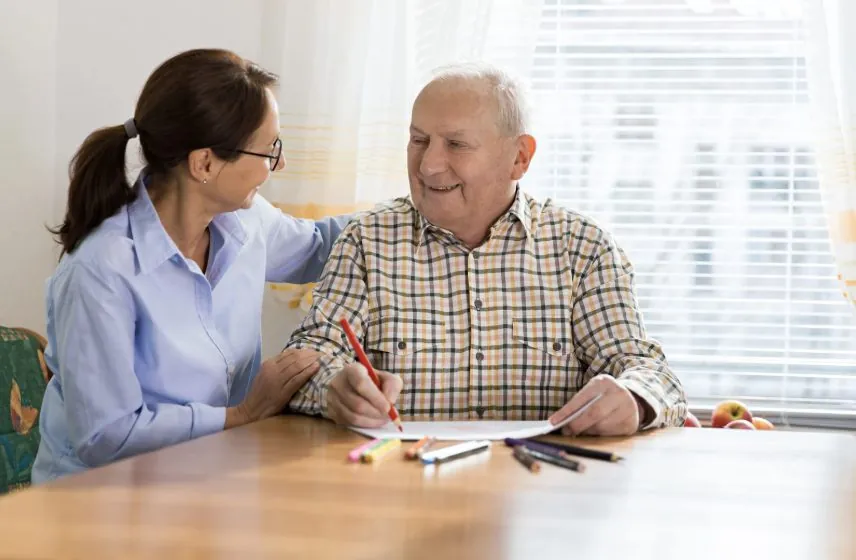
In-Person Therapy
In-person speech therapy offers focused, personalized care in a welcoming South Bay office designed to support children, teens, and adults. Sessions are shaped around each client's communication goals, learning style, comfort, and practical needs.
About In-Person Therapy ↗
School-Based Therapy
School-based speech therapy is best suited for students with speech, language, or communication disorders that impact their ability to succeed in the classroom, such as those with articulation issues, language delays, social communication difficulties, stuttering, or conditions like autism or learning disabilities. We work with each student's education team to meet their unique communication goals in school and at home.
About School-Based Therapy ↗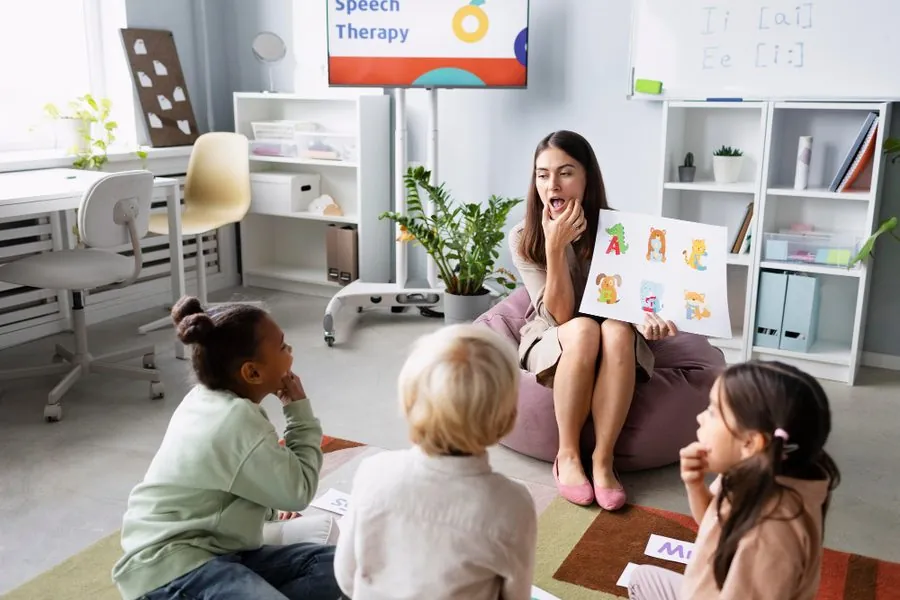
Group Therapy
Group speech therapy is best suited for individuals who benefit from practicing communication and social skills in a peer setting, such as children with social communication disorders, individuals with autism, or those working on pragmatic language skills. It can also be helpful for people recovering from conditions like stroke or brain injury, where interacting with others supports social engagement, teamwork, and real-world communication practice.
About Group Therapy ↗14 specialty areas
Open an area for a short overview, or visit its page for more detail.
01 Articulation and Phonological Disorders
Articulation and phonological disorders are speech disorders where individuals have difficulty producing specific sounds correctly (articulation) and struggle with the sound patterns and rules of their language (phonological), affecting their overall speech clarity and communication.
Explore this specialty →02 Phonology
Phonology refers to the study and treatment of sound patterns in speech, focusing on how individuals produce and organize sounds, and addressing issues related to phonemic awareness, sound discrimination, and the use of sounds in language.
Explore this specialty →03 Apraxia of Speech
Apraxia of speech is a motor speech disorder where individuals have difficulty planning and coordinating the movements needed for speech production, requiring intervention to improve their ability to articulate words correctly and fluently.
Explore this specialty →04 Expressive and Receptive Language Delays
Expressive and receptive language delays affect how a person shares ideas and understands spoken language. Expressive needs may show up as difficulty finding words, building sentences, or telling a clear story. Receptive needs may affect following directions, answering questions, learning new vocabulary, or understanding conversation. A comprehensive evaluation helps identify the individual's language profile and useful next steps.
Explore this specialty →05 Autism Spectrum Disorder
Autism spectrum disorder (ASD) refers to a developmental condition characterized by challenges in communication and social interaction. Therapy focuses on improving language skills, social communication, and functional communication strategies tailored to the individual's needs.
Explore this specialty →06 Social Skills
Social skills refer to the ability to effectively communicate and interact with others, including understanding social cues, initiating conversations, and maintaining relationships.
Explore this specialty →07 Executive Functioning & ADHD Coaching
Evidence-based coaching to strengthen organization, planning, time management, attention, emotional regulation, and independence for children, teens, and college students with ADHD and executive functioning challenges.
Explore this specialty →08 Cognitive Communication Deficits
Cognitive communication deficits refer to impairments in the cognitive processes that underlie effective communication, including attention, memory, problem-solving, and executive functioning, which can impact an individual's ability to understand, produce, and engage in conversation.
Explore this specialty →09 Auditory Processing
Auditory processing describes how the brain recognizes, organizes, and makes sense of sound. Difficulties may become more noticeable when speech is fast, instructions have several steps, or background noise is present. Because listening, hearing, attention, and language can overlap, speech-language assessment may be coordinated with an audiologist or other professionals when appropriate.
Explore this specialty →10 Fluency
Fluency refers to the smoothness and flow of speech, focusing on the rhythm, rate, and ease of speaking, which may involve addressing issues such as stuttering or interruptions in speech patterns.
Explore this specialty →11 Dysphagia
Dysphagia refers to the assessment and treatment of swallowing difficulties. Therapy focuses on improving swallowing function, ensuring safe eating practices, and developing strategies to manage the condition effectively.
Explore this specialty →12 Oral Motor and Feeding
Oral motor and feeding therapy refers to the evaluation and treatment of the muscle movements and coordination required for speech, chewing, and swallowing, focusing on improving an individual's ability to eat and communicate effectively.
Explore this specialty →13 Augmentative and Alternative Communication
Augmentative and alternative communication (AAC) involves using tools and strategies, like picture boards or speech-generating devices, to help individuals with communication difficulties express themselves.
Explore this specialty →14 Accent Modification
Accent modification involves strategies and techniques to help individuals alter their speech patterns, pronunciation, and intonation to achieve greater clarity and understanding, often with the goal of reducing a regional or foreign accent.
Explore this specialty →Take the next step, schedule a consultation today
Choose a time on Siobhain's calendar, or call if you prefer.